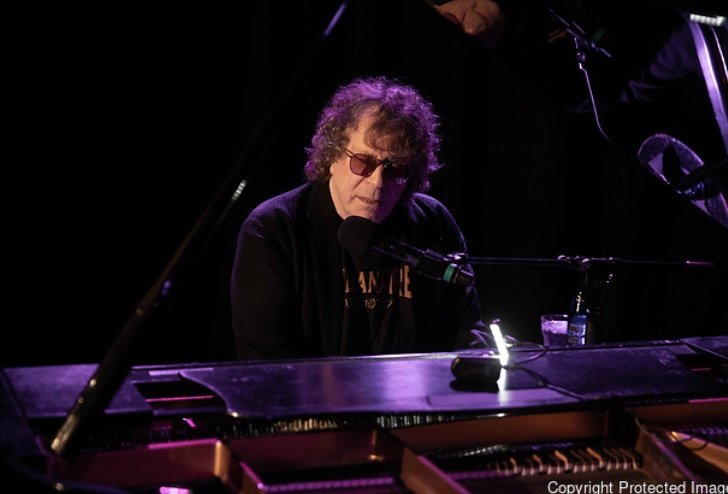
There is a particular kind of quiet that falls over a small room when a performer has it completely in hand. At the Triad Theatre on West 72nd Street, across two nights on October 2 and 3, Randy Edelman earned that quiet again and again, and then broke it himself with a laugh, a story, or a run of notes that seemed to lift the ceiling a few feet higher.
One man, one piano. No band, no orchestra, nothing to lean on. That is how Edelman performs, and for a composer whose music has filled movie theaters around the world, it is a daring way to work. Everything the audience hears comes from ten fingers and one voice. There is nowhere to hide, and he plainly has no interest in hiding.
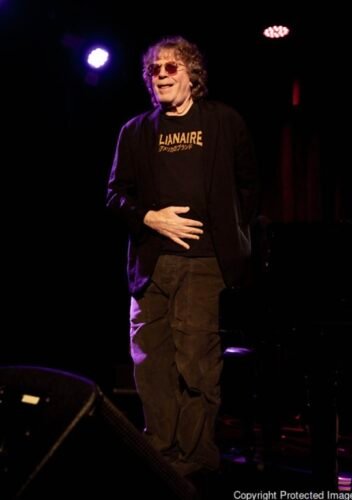
What made these nights feel like more than a club date was the timing. Green Park, his new album, arrived on Cherry Red Records on September 25. The Triad followed one week later. On December 19 he returns to Carnegie Hall for American Original, his third appearance on that stage. Seen in that light, the Triad was a staging point, a chance to watch an artist gather speed at close range before the room gets very much bigger.
And speed is the right word. Edelman has been making records for more than fifty years, and he could easily coast on what he has already built. This is the writer behind “Weekend in New England,” a songwriter whose work has been recorded by Barry Manilow, the Carpenters and Patti LaBelle. This is the composer of Gettysburg, My Cousin Vinny, Twins and Kindergarten Cop, and of The Last of the Mohicans, which brought him a Golden Globe nomination. A catalog like that would let most artists settle into a comfortable victory lap. He plays instead like a man with somewhere to be.
At the piano, music written for the widest possible canvas shrinks to human scale and somehow grows in feeling as it does. Themes built for full orchestras turn out to have sturdy bones. Take away the strings and the brass and what remains is melody, and melody has always been his great gift. In a room this intimate you can hear the songwriter inside the film composer, and the two have never sounded more like the same person.
Then there is the talking. Edelman is a born raconteur, and the stories between the songs are as much a part of the evening as the songs themselves. He is funny, a little mischievous, and generous with the view from behind the curtain. The effect is less a recital than an evening spent at the piano with a friend who happens to have lived an extraordinary musical life and is glad to tell you about it.
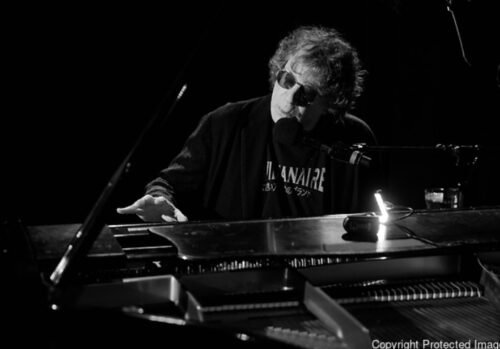
Greatness is an easy word to throw around and a hard one to earn. It rarely announces itself. More often it shows up as command, as ease, as an artist so at home in his own work that he can take it apart and rebuild it in front of you without a seam showing. That is what was on display at the Triad. It was the sound of a musician still climbing, with a new album in hand and Carnegie Hall on the calendar.
Come December 19, the hall will be grander and the audience many times larger. Those who were on West 72nd Street this October will be able to say they saw the climb up close, and that from where they sat, Randy Edelman was already soaring.
Photo Credits: Billy Hess