On the Saturday morning of Labor Day weekend, my best friend Dani, also a writer, wrote to tell me that Robin Morgan, the landmark American feminist activist, organizer, and writer, had died. In the midst of the rush to finish my syllabi and opening week assignments, as my husband shuffled the kids into their sneakers and Crocs and the car for one last back-to-school outing, everything stopped. I stood at the kitchen sink watching the light filter through the holly bush at the window and cried.
Article continues after advertisement
Born January 29, 1941, Robin’s list of accomplishments, which included 23 books, organizing the famed protest of the 1969 Miss America Pageant (when feminists crowned and sashed a sheep on the nearby Atlantic City Boardwalk), and the founding of the National Network of Rape Crisis Centers, is extraordinary, and outlined in the outpouring of obituaries in newspapers here and abroad. But only a handful of these tributes mention Robin’s profound influence on Sylvia Plath’s legacy, one which in turn dramatically affected Robin’s life and career. If they do, this legacy is reduced to the mention of Robin’s poem “Arraignment,” which began with the lines
How can I
accuse
Ted Hughes
of… the murder of Sylvia Plath?
In fact, just trying to quote the opening lines of “Arraignment” points immediately to the ways Robin’s relationship with Plath’s work will not be reduced. Robin included “Arraignment” in her 1972 poetry collection Monster, but the published “Arraignment” wasn’t the version she wanted in print. Robin’s original version of “Arraignment” began “I accuse / Ted Hughes / of… the murder of Sylvia Plath.” As she detailed in a 1973 essay written for Feminist Art Journal, prior to Monster’s publication, but after galleys had already been printed, Robin was called into a meeting with Random House lawyers, who informed her that “Arraignment” had to be pulled or rewritten. The poem as it stood, she was told, accused Ted Hughes of raping and murdering his wife, and was grounds for libel.
Robin’s response to these men was two-pronged: first, she had not accused Ted Hughes of the literal murder of his first wife, who she agreed had certainly died by suicide on February 11, 1963. Robin was instead arguing that through his extreme (and well-documented) censorship of Sylvia’s work after her suicide, Hughes had killed Plath’s artistic corpus and her radical politics. “Arraignment” used the word “murder” satirically, as part of a long artistic tradition: Marvel, Swift, Donne. Second, in her time researching Sylvia Plath, Robin had seen a series of letters Plath wrote that described abuse, including sexual abuse, by Hughes—about twenty letters, she wrote in Feminist Art Journal—so her accusation of rape in “Arraignment” was based on, and back up by, Plath’s own words. Robin quoted one of these letters: Why must the killing of me be so elaborate? “A purely Plathian line,” she wrote.
The poem as it stood, she was told, accused Ted Hughes of raping and murdering his wife, and was grounds for libel.
Robin’s concise and insightful argument meant nothing to Random House’s lawyers who, like many literary legal teams of the time, were likely aware of Ted Hughes’s propensity for lawfare to shut down anyone trying to challenge his version of Plath’s life and work. So, Robin rewrote “Arraignment,” changing “I accuse / Ted Hughes” to “How can I / accuse / Ted Hughes,” a brilliant rhetorical move that managed to contain her quagmire in line breaks and punctuation. How can I do this and get away with it? she asks herself on the page—while getting away with it, since the poem in its second form went to print.
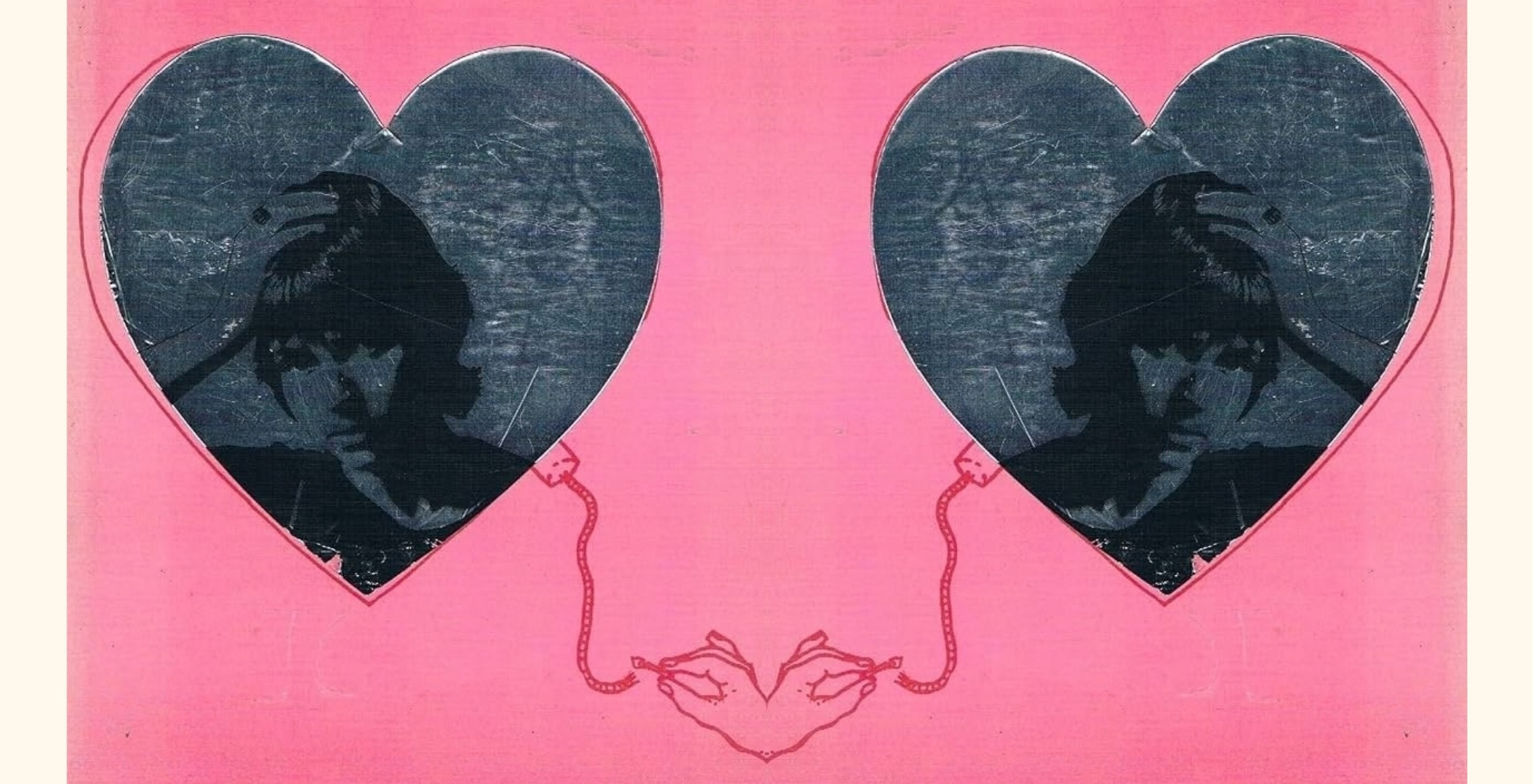
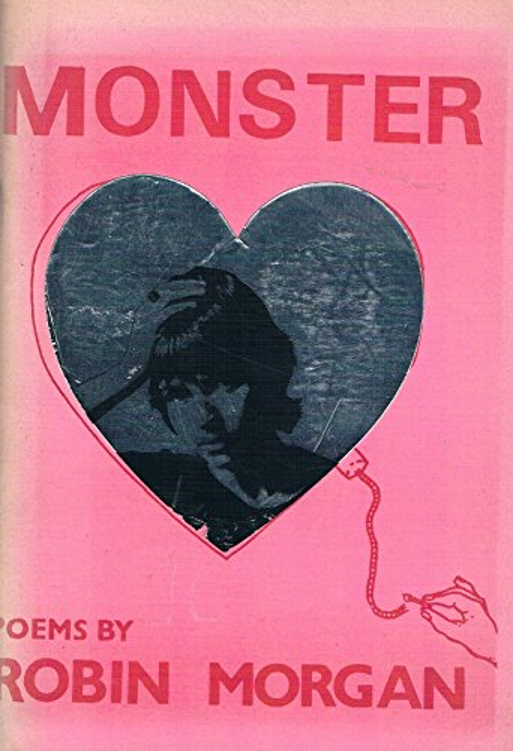
It was vintage Robin, the woman who once derided women’s attempts to organize alongside leftist men as “the dream that being in the leadership collective will get you anything but gonorrhea.” But in many ways, it devastated her. She felt Monster had been ruined, and that her creative and political ethics, which for her were always one and the same, were compromised. She was literally sick over it, writing in Feminist Art Journal that she took to gobbling Dramamine before meetings with the Random House lawyers. But a reprieve was on its way: when the original version of “Arraignment” was printed in Feminist Art Journal, women all over the world reprinted pirated versions of Monster with the first “Arraignment” restored. Their version of Monster was hot pink, with a silver sticker emblazoned with Robin’s face. “Those women,” she said about the pirated Monster, in one of our phone conversations, “all those wonderful women,” her voice breaking, decades later, at the ways they rallied around her.
“Arraignment” and its surrounding controversy inspired one of the most potent Plath mythologies, the story that Ted Hughes stopped giving readings in America because women would protest them by shouting “Arraignment” at the top of their lungs. This story persists, even though the Plath scholar Janet Badia, in her foundational book Sylvia Plath and the Mythology of Women Readers, proved definitively that these protests never happened. What happened instead was the literary establishment went all in on shutting down Robin Morgan, who told me that Doris Lessing called her at home to tell her to “knock it off,” in no uncertain terms. This was borne out by my own archival research—a letter by Ted Hughes’s sister Olwyn, held by Emory University, describes her efforts to enlist Lessing in the efforts to quiet Robin—but it was stunning to hear it confirmed by Robin, in her own voice, over my office telephone, as though the call was coming from the long dead past.
The power of Robin’s voice was all over that long dead past, as I delved into archives to write Loving Sylvia Plath: A Reclamation, a book written largely in response to “new” letters by Sylvia Plath that emerged in 2017. The letters were not actually new, of course, just long hidden. There were fourteen of them, all written to Plath’s psychiatrist-turned-confidante, Dr. Ruth Barnhouse Beuscher, between 1960 and 1963, the last within a week of Plath’s 1963 suicide. They contained first-hand accounts of Ted Hughes’s violence, including a description of a beating that Plath thought induced her February 1961 miscarriage. The letters had been stolen from Ruth Beuscher sometime in the late 1960s or early 1970s by a young researcher named Harriet Rosenstein, who was commissioned by Knopf to write a “critical biography” of Plath, one that never made it to print. In 2017, Rosenstein tried to sell the letters; their presence at the New York Antiquarian Book Fair made international headlines, namely that Plath’s allegations of Hughes’s violence were “shocking.”
Robin knew better than anyone that the personal is political (a slogan she helped to write!) and that art is the most vital expression of this.
As a longtime Plath researcher, I knew the revelations weren’t shocking, but when I really tried to delve into the origins of my knowledge, what kept coming to mind was Robin Morgan’s “Arraignment,” a poem I had been told to read and dismiss as a young woman student of literature and creative writing. When I revisited “Arraignment” to write Loving Sylvia Plath, I was astonished to see Robin laying out large parts of my “radical” argument about Hughes’s violence and control of Plath’s life and legacy—in 1972.
So, I wrote to her to ask for an interview. She declined through her assistant but generously sent me two archival documents: an article she herself had written in response to the emergence of Plath’s letters to Beuscher, which the Times Literary Supplement had planned to run, and pulled at the last minute, and her 1973 article from Feminist Art Journal, a magazine long out of print. When I read it, the hairs on the back of my neck stood up. That “purely Plathian line,” Why must the killing of me be so elaborate? came verbatim from one of Plath’s letters to Beuscher. It appears in nothing else she wrote.
Robin, then, had read those letters, before they were stolen (she later confirmed this to me, but declined to elaborate on the circumstances). When, in “Arraignment,” she made her argument against Hughes, it was both rhetorical and textual. The disappearance of those letters—which would last for half a century—aided in the literary establishment’s attempts to paint Robin as the madwoman in the attic of Plath studies. It was this, she later told me, that hurt her the most, the smear campaign against her poetry as baseless inflammatory libel, when in fact she had done such meticulous, groundbreaking research to produce it. “Arraignment” not only told the story of Hughes’s violence against Plath, it made the case for his general pattern of violence against women, by telling the world about Assia Gutmann Wevill, Hughes’s lover from 1961-1969—the year that Assia, too, took her own life, and the life of Shura, her child with Hughes. In 2006, the Plath scholar Judith Kroll took credit for being the first person to name Wevill publicly in her 1976 book, Chapters In A Mythology. But she was either lying or misinformed—it was Robin, in 1972.
In 2009, Honor Moore wrote accurately of Plath’s role in second wave feminism that Sylvia was “an avatar” for everything women were then thinking, feeling, speaking, and writing. But that didn’t happen by accident. Robin propelled Plath’s work to the forefront of the movement by including poems like “The Jailer,” which Hughes had excised from Ariel, in RAT, a radical magazine she helped edit, in the late 1960s, and in her groundbreaking anthology Sisterhood Is Powerful, published so early in Plath studies that it misdates Plath’s age at the time of her death in her short biography at the back. That biography closes with the line, “There was no women’s movement then,” which I count as the earliest example in print of Robin’s forthright belief that marital violence contributes to women’s deaths, whether they are killed by their abusers or take their own lives. It’s the same argument I made in Loving Sylvia Plath, one I was able, finally, to back with empirical research, research Robin’s work on Plath laid the groundwork for, half a century ago.
I sent Robin a copy of Loving Sylvia Plath when it debuted in July of 2024. About a month later, I picked up a voicemail and heard her unforgettable voice say the words, “I am just calling to talk to you about your wonderful book, my dear. Call me back!” I had to call Dani for courage first, but I dialed Robin’s Manhattan number. When she picked up, the first thing she said was, “Hold on, dear, I’m listening to these criminals at the Republican National Convention, I have to turn them down.”
That was the first of many conversations on the phone, and email, that went on until this past spring. We meant to meet up in person twice (“You’ll have to come and have tea in my garden”), but she was ill both times. When I told her I was working on a new project around campus sexual violence, she immediately put me in contact with several organizations doing groundbreaking work on that grimly perennial subject. She was the literal embodiment of generosity and love, never divorcing those emotions from justifiable rage at the state of the world.
When I learned of her death, I was trapped in the obsessive hustle of the summer’s waning days, where I, like so many teaching parents, have tried to prep my classes, be a full-time mother, and (ha) “relax,” events which have, frankly, taken me to pieces. For weeks, I have walked around on the verge of tears as I tried to inhabit two lives at once and felt my selves split and splinter. I’ve entered each day disembodied, my hands in one place, my head in another, my heart in a third. The culture hums beneath this all: mudslides in Nepal, wedding-goers in Iran murdered by American bombs. In Palestine, the ongoing genocide. And Lindsay Clancy’s case, proving that whatever American way we’re allegedly trying to preserve with the latter actions should have died long ago, as a mercy for so many.
No one knew this better than Robin, who worked her entire life to honor her profound love for her son by making the world a better place for mothers everywhere. This was informed in no small way by her reading of Sylvia Plath’s final, great poetry about art, motherhood, marriage, and violence. Robin knew better than anyone that the personal is political (a slogan she helped to write!) and that art is the most vital expression of this. Anyone who tells you otherwise is trying to sell you something, shut you up, or both.