I’m starting this draft on the Fourth of July, 2026 in the Northern California redwoods. The phrase “250 Years of Independence” inundates my social media feed, though most people posting the phrase chide the intended meaning, highlighting the contradictions of the euphemism, some the outright lie.
Article continues after advertisement
And I wholeheartedly agree.
And yet here I sit, excitedly making plans to watch the U.S. men’s soccer team take on Belgium in a couple days. (And my god was my Chicano goth heart conflicted as Mexico and England played the day before!) My key requirement in choosing a venue: one that is loud and friendly, but yet won’t be filled with the kind of supporters shouting USA! USA!
I can’t think of a better example of being Latino in the United States at this fraught moment of our history.
So what does all this have to do with Latinx literature or Latine identities?
Everything.
And the previous sentences are a perfect literary example of my own psychological ambivalence about the subject matter: my inability to settle on one descriptor.
Is it Chicano, Hispanic, Latino/x/e, (I still love the brief moment when Latin@ was in fashion)? I once had an editor reject my essay because I shifted between using those terms without explanation. “But that was the point,” I argued, referencing Gloria Anzaldua who refused to translate or kowtow to one kind of reader, to one language.
I love the discomfort, the confusion, the chaos that those words engender, so I mix and match Latino, Latinx, Latine consciously. Whimsically.
Though perhaps I am being disrespectful, minimizing the importance of self-definition, of pride, arming those in power with ways to chide or ridicule our discourse.
And I agree with this critique.
And I don’t.
Do I root for the USA or Mexico or or or?
Now you understand the predicament.
Need more statistical proof? According to Fernanda Figueroa, researching U.S. Latinos for AP News in 2025: “this growing community is far from being a monolith. From shifting identities, increasing educational attainment and growing political influence, Hispanic Americans continue to be a major part of the nation’s tapestry.”
A few years ago, I sat down at a cafe table during the LA AWP 2024 Conference next to an unassuming elder sipping coffee. After I settled, I realized the elder was none other than Luis Rodriguez. I can’t begin to express how much his book Always Running affected my life as a young father during my early twenties.
Of course, I wanted to immediately share that with him, but I waited; instead, we chatted: conferences, LA freeways. He was gracious and kind. Then, we shared stories of becoming a grandfather, of wild and unruly families, of lessons and survival. At that point, I thanked him for his writing. I told him how it helped me. He nodded but then said: “to be honest, the medicine you need is always within.”
This has become my mantra: my note to self, my reason for reading, my desire to write: unearthing the medicine.
In my 2024 novel All Friends Are Necessary, I strove to create characters who could do what I struggled to do: accept all their complexity and contradictions, revel in the fluidity of identity. I imagined communities of friends and lovers who resisted the need to define each other in such static ways. That’s why I love art and artmaking: the power to imagine how things could be.
With my new novel, The King of Aloe Vera, I focus on Rey, an amalgamation of all my elders back in the day joking about glass ceilings in that way that belies a rage and a futility: brown enough to get the job but too brown to get promoted. Well, that’s just a small part of the novel; it’s really about the beautiful messiness of living in the western United States, in the Bay Area, land that was once Aztlan, always indigenous, and as Anzaldua reminds us: will be again.
So for this “His Panic” Heritage Month, I’m recommending works by fellow Latinx writers who will show us—not the singular way—but the multiplicity of ways to celebrate and love ourselves in all our glorious and uncomfortable messiness.
I wish I could do what Bad Bunny did in the 2026 Super Bowl halftime show, transgressively push back on while reclaiming the phrase: “God Bless America.” He proclaimed it and then proceeded to list every nation of the Americas, decentering the commonly viewed understanding of that word “America” as specific only to the United States.
So let this be my attempt to say something similar: I love Latine Literature, and instead of referencing the well-known expected names, start with these.
And then perhaps we can attempt to name each and everyone of us picking up the pen, scribbling away our stories, building the narrative.
Because we need you.
Because we are the medicine.
Drop me a postcard with your recommendations to keep the list going:
POB 3555 Berkeley CA 94703.
*
*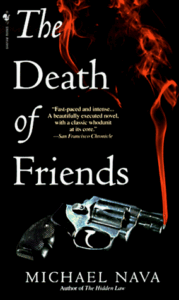
Michael Nava, The Death of Friends (or any of the Henry Rios novels, 8 in total)
Nava writes contemporary queer Chicano detective novels set in LA and the Bay Area. They are messy and at times romantic and perfect beach reading thrillers while also exploring issues of queerness and self-acceptance and homophobia. Characters are often faced with pressure from both within and outside of their communities.
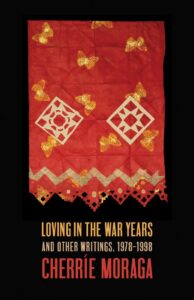
Cherríe Moraga, Loving in the War Years
I was pleasantly surprised to see Alta Magazine write about Moraga’s last book, Native Country of the Heart, in the 2026 summer issue, but the book that radicalized me while attending UCSB in the ’90s was Loving in the War years. “You can do that,” I remember thinking, the way she moved through poetry, creative nonfiction, literary theory. I still love using her essay “Art in Ameríca con Acento” as a starting off point for my literature classes. Fireworks for real.
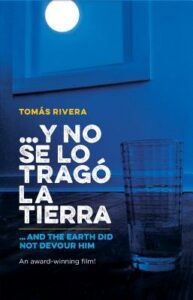

Tomás Rivera, …and the earth did not devour him and Ron Arias, The Road to Tamazunchale
These are my literary abuelos. Brave books written during the height of the Chicano civil rights movement that eschewed the stereotypical narratives, that offered complex, at times problematic, yet wholly human characters; Rivera and Arias played with form and theme and style, that pissed some people off, but in my humble opinion these are the books I return to and use in my classes repeatedly because of their risks and vulnerability and beauty.

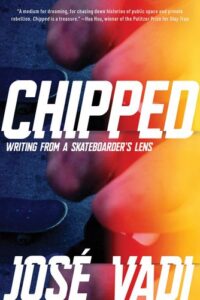
José Vadi, Inter State and Chipped
I love the essay, the long form exploration of a subject that weaves in personal narrative and research and dazzling sentences: that is what Vadi does. With subjects ranging from California history, skateboarding, dive bars, gentrification and jazz: there is such joy and clarity and curiosity in how he explores these topics.
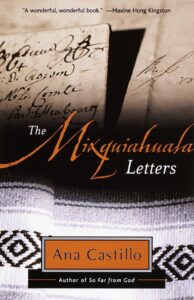
Ana Castillo, The Mixquiahuala Letters
I love letters: the slow process of writing them by hand, the stamping and addressing, the waiting weeks for the response. I figure I acquired this love from Ana Castillo’s epistolary novel between two lovers, using their letters to explore identity, sexuality, cultural history. I was thrilled by Castillo instructing the reader on how to read the book based on personality types which then changes the chronology of the story. Risky and revolutionary.
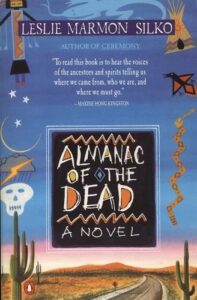
Leslie Marmon Silko, Almanac of the Dead
(Silko as far as I know does not identify as Latinx, but this book explores so many issues relating to our community that I’m giving it an honorary place here.) Big books are in vogue now: East of Eden and Lonesome Dove and yeah, they are problematic as hell, but I understand why people keep picking them up. However, everyone who reads those books (or any book about the U.S. Southwest) should read Leslie Marion Silko’s Almanac of the Dead: the scope, the vision, the world building, the critical fabulation of imagining an invasion of the U.S. by Indigenous Mexican revolutionaries, armed homeless reclaiming Tuscon, AZ. The book is magic, a cleanse, perhaps an antidote.
And as a bonus, various poetry collections I love: Donato Martinez’s Touch the Sky, F.G. Manos Papi’s Rift, MK Chavez’s Dear Animal, all on vital small presses which you should totally go out and support.
__________________________________
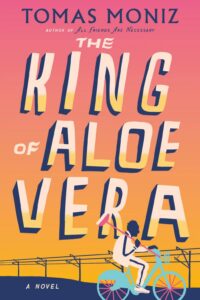
The King of Aloe Vera by Tomas Moniz is available from Algonquin, an imprint of Hachette.